
Apple’s 20th iPhone Anniversary Model May Not Live Up to the Hype
There’s been a fair amount of buzz from certain parts of the rumor mill that Apple has big plans for next year as it prepares to celebrate the iPhone’s 20th anniversary. However, a new report from a reliable source could have us tempering some of those expectations.
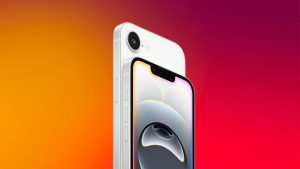
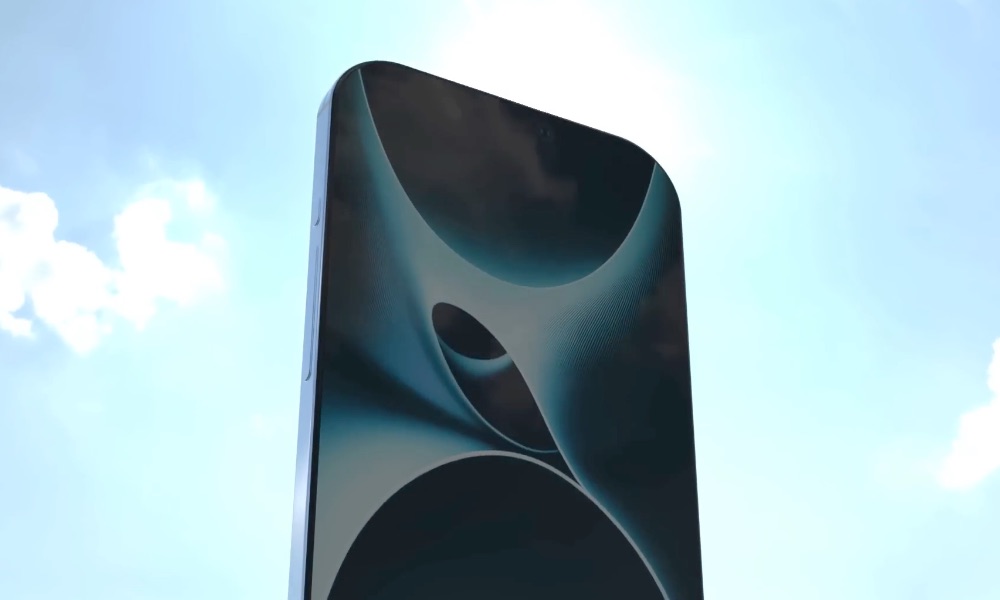
One of the most prominent rumors is that Apple is aiming to introduce an all-glass display for the so-called “iPhone 20” (on the assumption that Apple will skip over “19” next year, as it did with the “iPhone 9” in 2017). In this case, “all glass” refers to the front real estate — meaning, at the very minimum, there will be no notches, cutouts, or other holes marring an otherwise pristine display.
Some pundits have taken this even further, suggesting things like bezel-free wraparound screens, but those fit more in the realm of wild speculation. The industry has moved away from curved screens over the past few years, and it would be a weird throwback for Apple to go with a design that was already getting passé on Samsung phones by 2018.
The idea of a display with no holes doesn’t seem unreasonable. After all, not only have there have been plenty of rumors pointing to Apple’s work on this going back to at least 2019, but it’s also very much in line with the company’s design ethos. It’s done its best to present the notch and the Dynamic Island as “features” — even going so far as to integrate the latter into the user interface — but really, it’s just making the best of an awkward situation.
The problem is the cameras and other sensors used for Face ID need a clear line of sight, and that means there has to be a cutout somewhere in the screen for them to “see” through. Some niche smartphones have toyed with under-display cameras, but the technology isn’t ready for prime time, and even mainstream Android makers, which are usually more willing to take risks, haven’t gone there yet.
That doesn’t mean Apple isn’t still trying to crack this nut, but it’s a matter of waiting for the technology to catch up to the vision — and it’s seemingly been taking longer for Apple to get this right than many were expecting.
The Long Road to Under-Display Cameras

The consensus in recent years is that Apple would take a phased approach to eliminating the screen cutouts, starting with the easier task of moving Face ID sensors under the display before tackling that actual selfie camera, which is considerably more challenging to deal with. However, even that’s a more gradual process.
Several reports last year suggested Apple would move to a hole-punch design this year’s iPhone 18 Pro, placing all the Face ID sensors under the screen. However, those have turned out to be a bit optimistic. It seems some folks forgot that Face ID is powered by not one, but three sensors, and not all of them are ready to make the move.
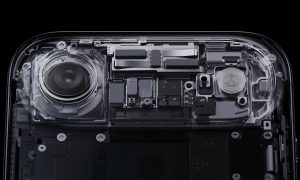
Yesterday, several leakers with insights into Apple’s supply chain clarified that the Dynamic Island isn’t going anywhere, since only one sensor, the flood illuminator, will be going under the screen. The other two — the dot projector and infrared camera — will be staying put. That might result in a shrunken Dynamic Island, but it will still be a pill-shaped cutout.
The leakers, Instant Digital and ShrimpApplePro, both claimed this was always the case, and that something got lost in translation when sites like The Information and FPT’s Jon Prosser reported that we’d see a hole-punch camera in the top-left corner. Retired industry display analyst Ross Young, who still has his finger on the pulse of the supply chain, also added that he’d been alluding to this for months.
This relatively slow approach should make it obvious that Apple isn’t anywhere near ready to hide everything under the display on next year’s iPhone, but just to make sure we’re all clear on the matter, Young reiterated that this year’s iPhone 18 Pro screen design will remain unchanged on the 2027 model.
While things could improve in 2028, we’re likely still a few years away from seeing a screen with no cutouts at all. Likely, Apple will gradually shift the rest of the Face ID sensors under the screen before it reaches the point where it’s ready to cover up the main selfie camera.
Anniversaries Don’t Dictate Apple’s Roadmap
As for the so-called “20th anniversary iPhone,” it remains an open question whether we’ll see anything nearly as revolutionary as the 2017 iPhone X. While many folks believe Apple released a special model to celebrate the 10th anniversary of the iPhone, that’s not really Apple’s style. After all, we also heard reliable reports that Apple had an Apple Watch X planned for the 2024 model, which never materialized.
Celebrating anniversaries like this also isn’t good business for a company on the leading edge of technology. It makes no sense to hold things back to celebrate arbitrary calendar dates while you let your competitors get an edge, and Apple is the last company that would rush a new technology to push it out before it’s ready. The stars happened to align with the iPhone X, but it’s looking like history may not repeat itself in the case of the “iPhone 20.” That doesn’t mean we won’t see some significant upgrades — the A21 inside could be the first sub-2nm chip — but it will likely offer refinements to the iPhone 18 design rather than a total reimagining.
About The Author